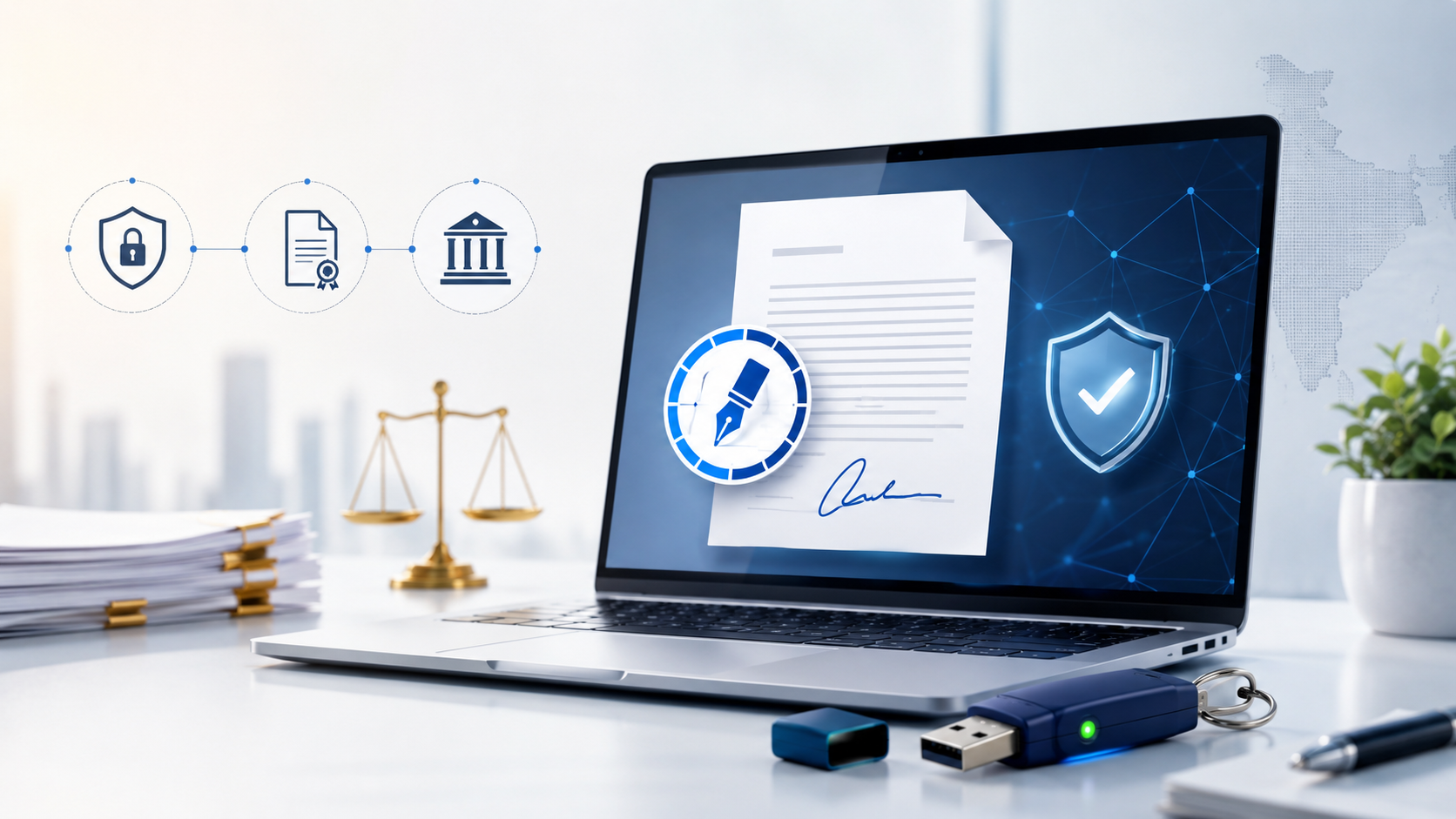
In 2026, businesses commonly use Class 3 Digital Signature Certificates for statutory and regulatory filings. The correct certificate type, identity details, token setup and portal association all matter before a filing can be completed smoothly.
A Digital Signature Certificate is used to authenticate electronic filings and signatures. For founders, directors and professionals, it often becomes one of the first technical requirements encountered when dealing with MCA, tax or other government-facing portals.
What is a Digital Signature Certificate?
A DSC links a verified identity to a digital certificate so electronic documents can be signed securely. In business registrations, it is commonly used by directors, subscribers and professionals who need to authenticate statutory forms online.
Who normally needs a DSC?
Company incorporation is one of the most common situations. Proposed directors and subscribers may need their own certificates to sign incorporation documents, while the professional certifying the filing uses a separate DSC. The certificate belongs to the individual rather than the company itself.
- Proposed company directors
- Subscribers signing incorporation documents
- Authorised business signatories
- Professionals certifying statutory filings
Get the DSC requirement checked early in the incorporation process. Leaving identity verification or token setup until the filing day can create avoidable delays.
Documents and application flow
The exact documentation varies by certificate type and provider, but individuals are generally asked for identity, tax and contact details. Organisation-level certificates can require additional entity and authorisation documents.
- Select the certificate type and validity.
- Complete identity and contact verification.
- Finish any required video or electronic KYC.
- Receive or configure the secure token.
- Download the certificate.
- Associate it with the relevant filing portal where required.
Cost, validity and renewal
There is no single universal price. The amount depends on the Certifying Authority, validity period, certificate variant and whether a new token is required. Renewal should be planned before a filing deadline rather than after expiry.
| Item | What affects it | Practical note |
|---|---|---|
| Certificate fee | Provider and validity | Compare the complete cost, not only the headline fee. |
| USB token | Whether a compatible token is already available | A fresh token can add to the first-time cost. |
| Renewal | Expiry and current verification requirements | Start before an important statutory deadline. |
Common MCA and portal issues
Many DSC problems are configuration issues rather than certificate problems. A mismatched PAN or profile, missing token driver, inactive signing utility or incorrect portal association can prevent the certificate from being detected.
- Check the certificate holder’s PAN and profile details.
- Confirm that the correct token driver and signing utility are installed.
- Use the correct portal account type before associating the certificate.
- Test the DSC before a filing deadline.
2026 update to keep in mind
Token and security requirements can change as Certifying Authorities implement updated technical standards. If you are applying or renewing later in 2026, confirm the current token requirement with the issuing authority before paying.
Need help with DSC or MCA association?
Tell us what you are trying to file and where you are stuck. We’ll help you identify the right next step.
Official resources
| Resource | Use |
|---|---|
| Controller of Certifying Authorities | Licensed Certifying Authorities and crypto-device guidance |
| Ministry of Corporate Affairs | MCA user profile and DSC association |
| GST Portal | GST-related DSC registration and filings |
Compliance rules, technical requirements and provider pricing can change. Verify the latest position on the relevant official portal or obtain professional advice before acting.